There is a moment in theater when you realize that something you imagined, discussed, planned, and worried over for months has finally become real. The lights come up, the audience settles in, and the work takes on a life of its own.
And if you're fortunate, something wonderful happens. The audience responds exactly as you had hoped.
That was my experience producing Our Loving Companions at The Marsh in San Francisco and Berkeley. And I have to say, it was exhilarating.
I've written plays before, but producing one is an entirely different undertaking. As a playwright, you begin with a blank page and gradually create a world. As a producer, you're still creating something from nothing, but now you're bringing together dozens of moving parts, each with its own challenges, personalities, and deadlines.
I learned quite a bit from the experience, including a few things I would certainly do differently next time.
The Extraordinary Reward of Connecting with an Audience
There is nothing quite like sitting in a full theater, feeling proud of the work you've created, and realizing that the message you hoped to convey is actually reaching people.
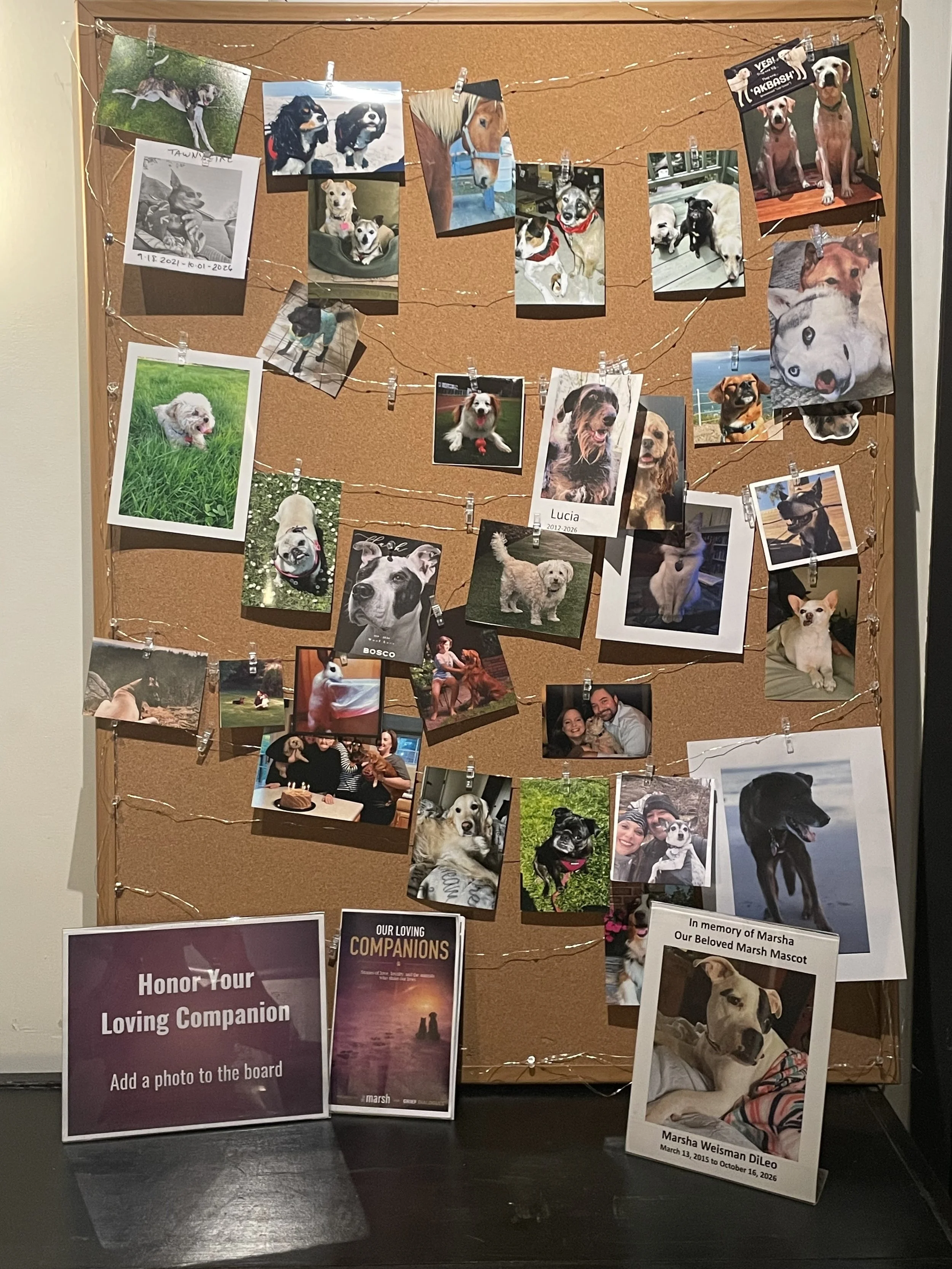
With Our Loving Companions, our goal was to celebrate the remarkable relationships we share with animals. We wanted to acknowledge the joy, humor, devotion, and yes, the grief that comes with loving them. But we were determined not to create an evening that felt overwhelmingly sad.
Together with director Pamela Hollings and my fellow co-producer Elizabeth Coplan, we carefully selected, arranged, and shaped the material to create an emotionally engaging evening, with moments of comedy thoughtfully woven throughout.
We wanted people to laugh, remember, reflect, and perhaps see something of their own lives in the stories onstage.
Judging by the response, we accomplished what we set out to do.
After the performances, audience members approached me again and again with comments I will not soon forget.
"This was so helpful."
"This needs to have another life."
"This needs to tour."
"How can we see it again?"
"I've never seen anything like this."
"I'm going to tell my friends about it."
I cannot adequately describe how gratifying it was to hear those words. When you've spent months working toward something, often questioning whether all the pieces will come together, having people tell you that the experience genuinely meant something to them is an extraordinary reward.
It also reaffirmed my belief in the production itself. The human-animal bond is something nearly all of us understand, yet we don't always have opportunities to celebrate it collectively. Seeing an audience respond so openly convinced me that Our Loving Companions deserves a life beyond these initial performances.
The Art of Creating Something from Nothing
One of the most satisfying aspects of producing was discovering how similar the process is to writing a play.
When I write, I begin with an idea. Characters emerge, relationships develop, and gradually a story takes shape. There are false starts, revisions, moments of inspiration, and plenty of uncertainty.
Producing follows a similar path, except that the creative process involves many more people and considerably more logistics.
Pamela, Elizabeth, and I worked together to curate an evening that had a deliberate emotional rhythm. We had to consider not only the quality of each individual piece but how the pieces worked together. Where should the audience laugh? Where should we give them room to reflect? How could we move between humor and more difficult emotions without making the evening feel heavy-handed?
Those decisions mattered enormously.
And it was deeply satisfying to see how much of that planning paid off once the audience was in the room.
What I Would Do Differently
Of course, not everything went as smoothly as I would have liked.
We were fortunate to have a terrific, highly professional cast. Their talent, experience, and commitment were essential to the success of the production. Working with Actors' Equity performers reinforced for me just how valuable that level of expertise can be.
But I also learned that even exceptionally talented actors need adequate time.
We had two weeks of rehearsals. In the future, I would strongly advocate for three.
That additional week would not simply be a luxury. It would allow the actors more time to explore the material, develop their performances, and become comfortable with the emotional demands of the production. It would also make the process more humane for everyone involved.
Another important lesson concerned the scripts themselves.
Our dramaturgical work was not entirely complete when rehearsals began, which meant we were still making substantive adjustments while the actors were working.
That is not ideal.
In the future, I would make certain that the scripts were fully developed before rehearsals started. There will always be discoveries in the rehearsal room, and those discoveries should be welcomed. But there is a difference between refining a finished script and still trying to complete one.
Having the material ready from the beginning would make the entire process smoother and give everyone a stronger foundation on which to build.
Producing Is Not for the Faint of Heart
Perhaps my biggest personal revelation was discovering just how demanding producing can be.
At any given moment, there are numerous issues requiring attention. Some are artistic. Others are logistical, financial, or interpersonal. Frequently, several arise at once, and each seems to require an immediate answer.
You have to be comfortable juggling competing priorities, making decisions with incomplete information, and occasionally accepting that the best available solution is not necessarily the perfect one.
I'll admit there were times when I questioned whether I was particularly well suited to the job.
Fortunately, I had Elizabeth Coplan to turn to. Her experience, judgment, and willingness to offer guidance were invaluable. When I found myself uncertain about how to handle a situation, I could go to her for perspective.
Having a collaborator whose expertise complements your own makes an enormous difference.
And I came away with a renewed appreciation for the people who produce theater regularly. It takes a remarkable combination of creativity, organization, patience, resilience, and good humor.
Would I Do It Again?
There were moments during this process when my answer would have been an emphatic no.
Producing can be exhausting. There are countless details to manage, unexpected problems to solve, and moments when you wonder whether the effort is worth it.
But then opening night arrives.
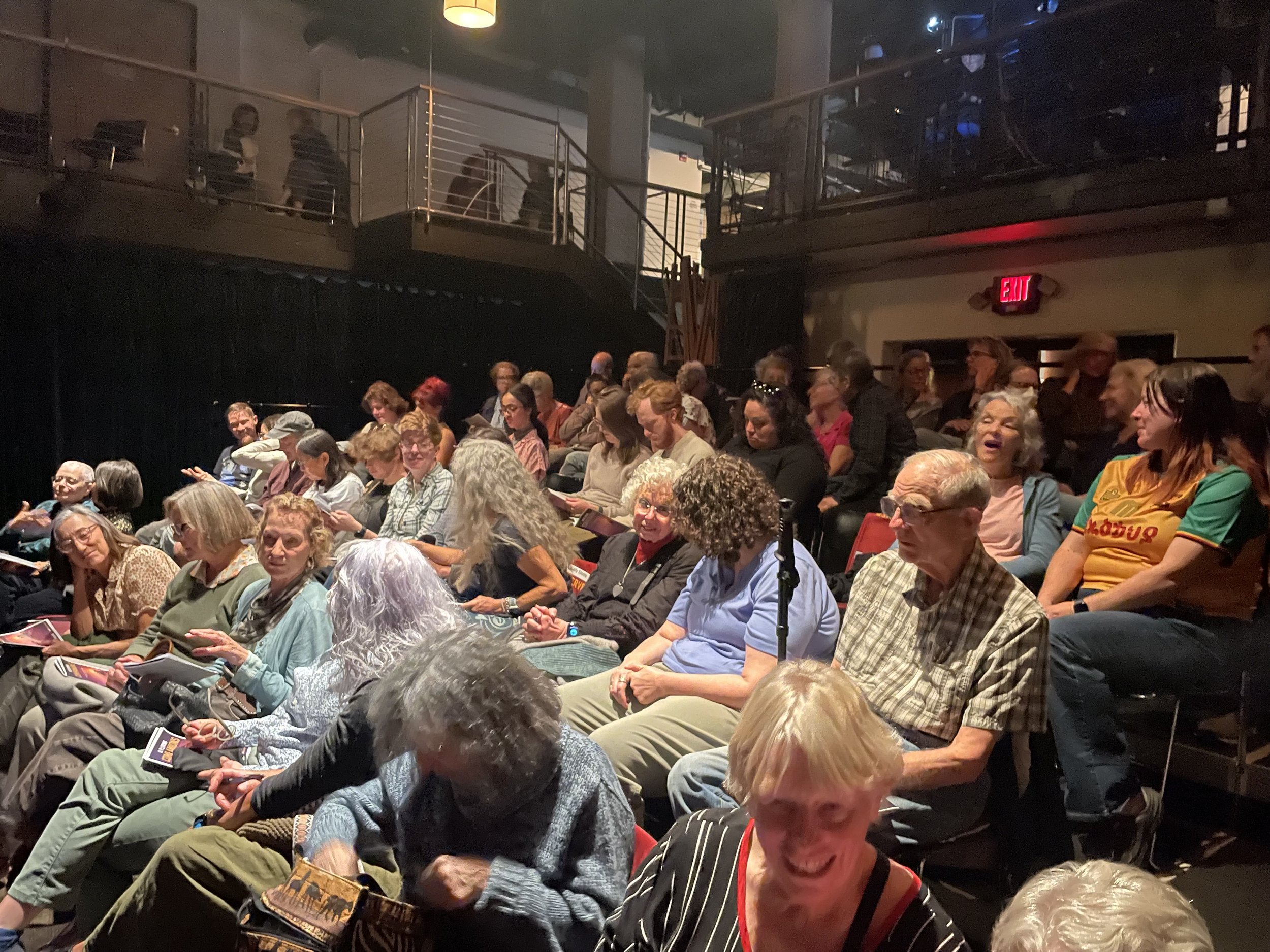
The theater fills. The actors bring the work to life. The audience laughs in the places you hoped they would laugh. They grow quiet when something touches them. And afterward, people approach you to tell you how much the experience meant to them.
Suddenly, the months of planning, the long conversations, the difficult decisions, and even the occasional sleepless night seem worthwhile.
What I learned is that producing, much like playwriting, requires a willingness to believe in something before it fully exists.
You have to trust the idea, trust your collaborators, and keep working even when you're not entirely certain how everything will come together.
And when it does come together, the feeling is extraordinary.
I still believe deeply in Our Loving Companions and in its potential to reach audiences well beyond the Bay Area. The response to these first performances has only strengthened that conviction.
So, would I produce again?
Knowing what I know now, with a few more weeks of rehearsal, finished scripts, and Elizabeth's phone number close at hand?
Yes. I think I would.
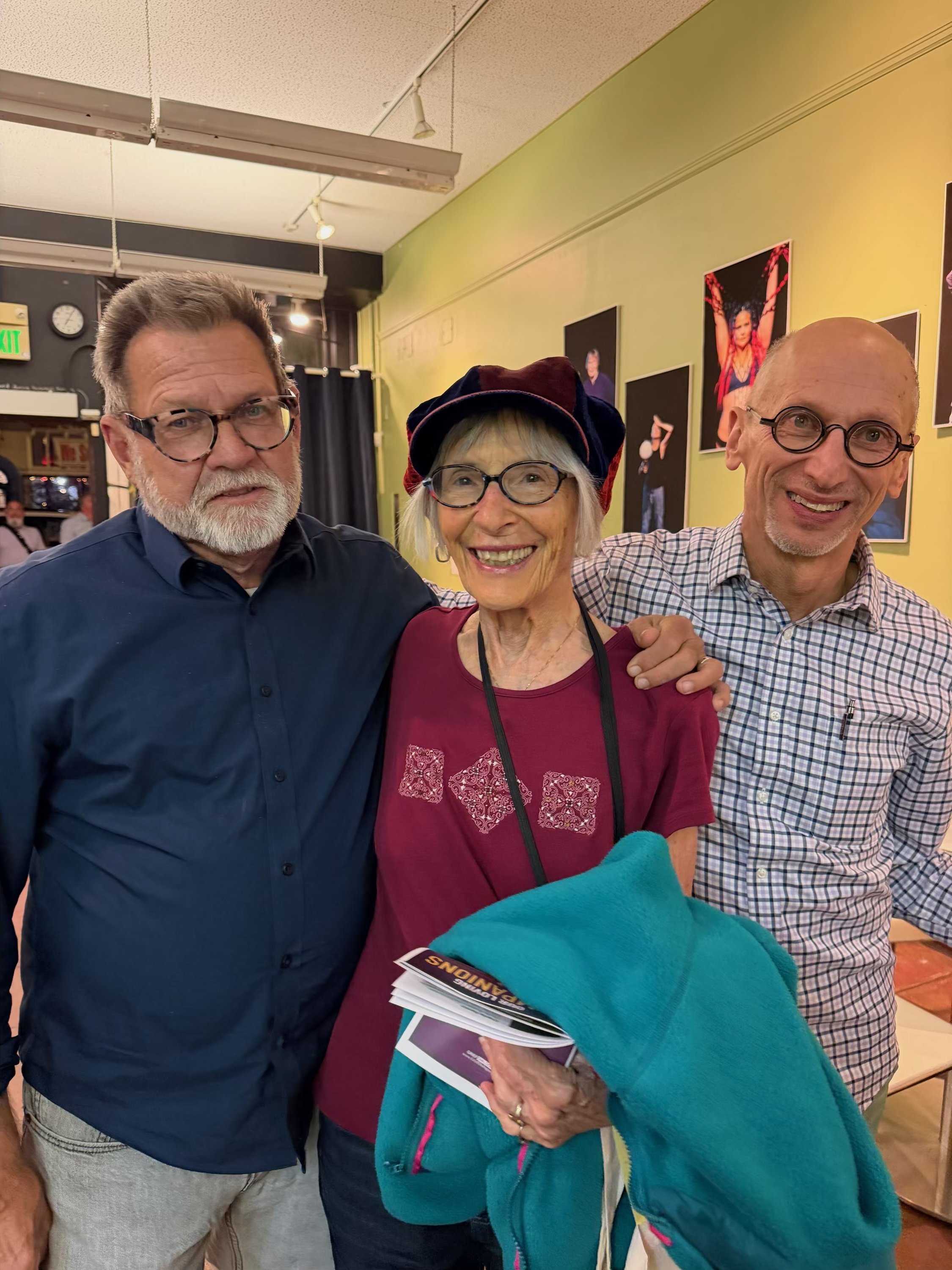
Me with Dr. Ken Gorczyca and Betty Karmack, one of the originators of the appreciation of the human animal bond in the bay area.
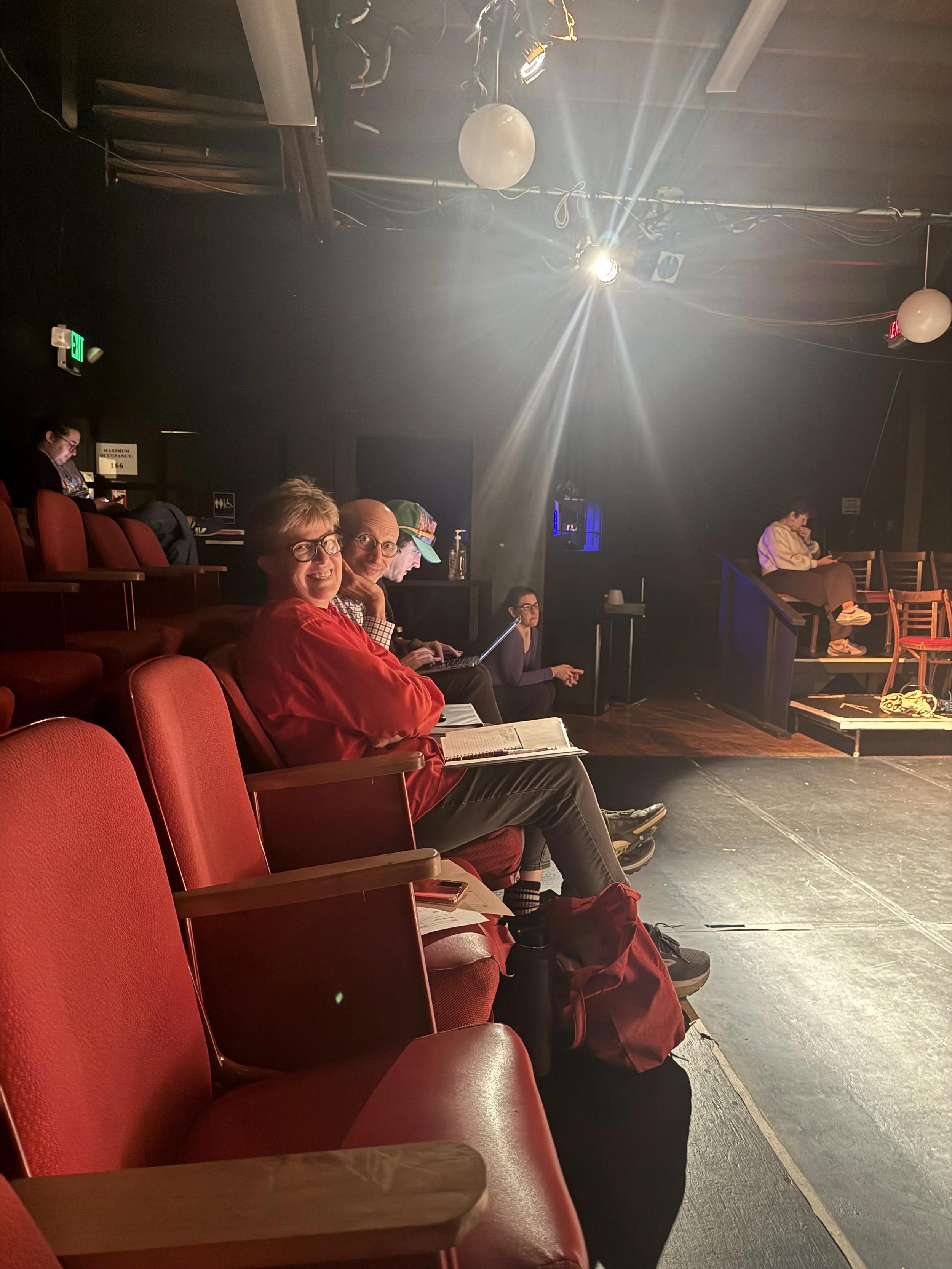
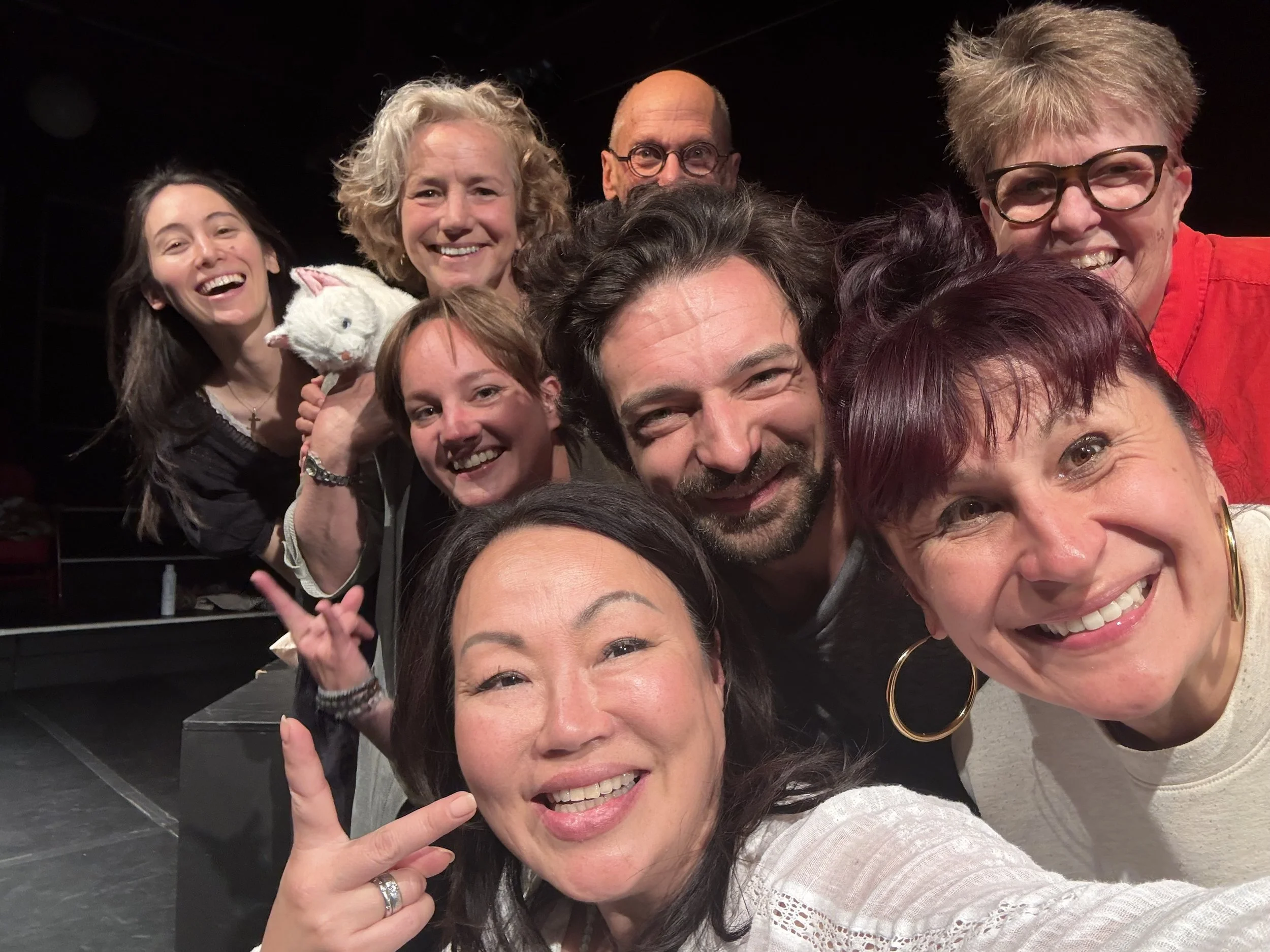
Fun at rehearsals!
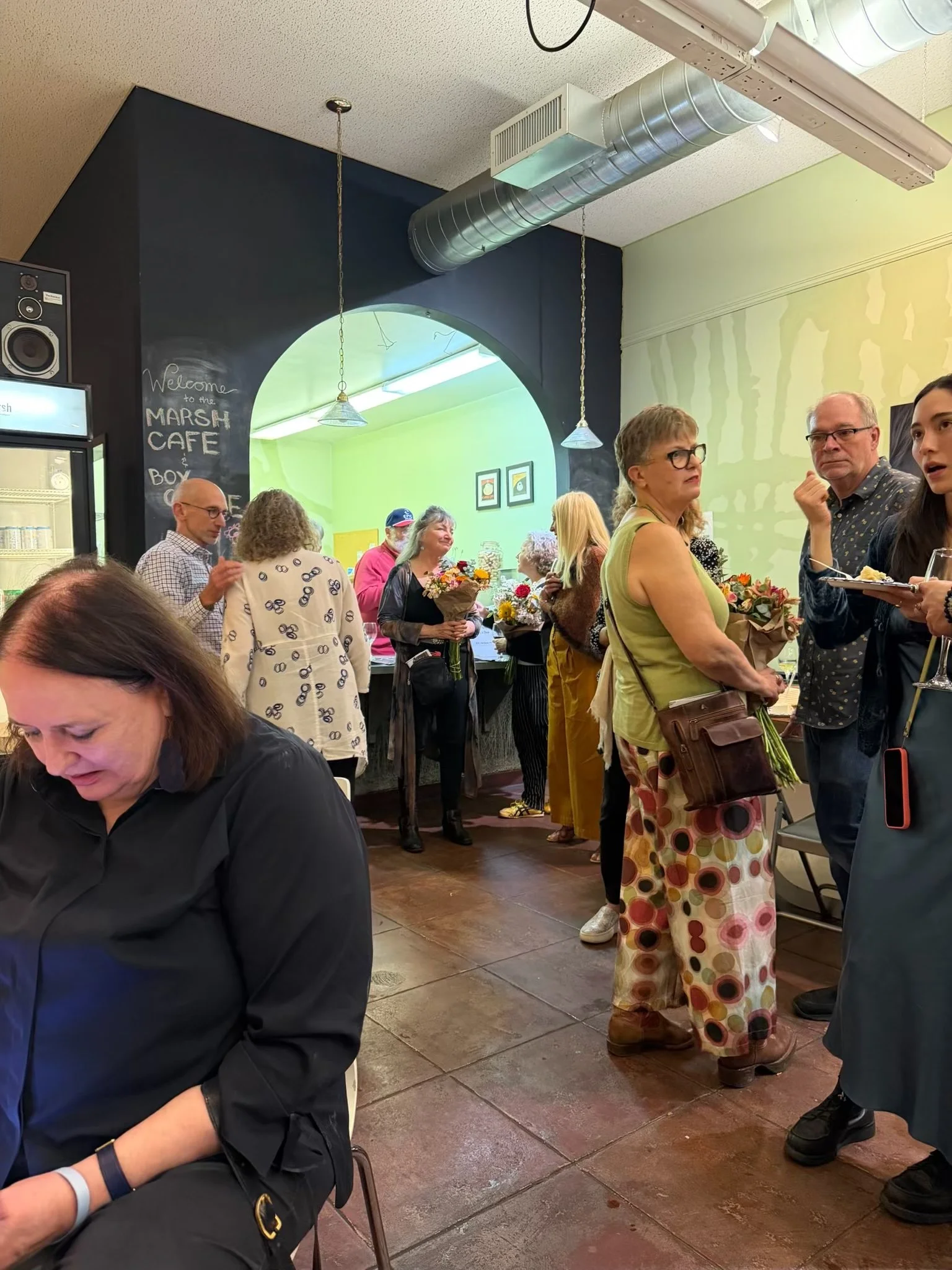
Wonderful to see old friends and meet new ones.